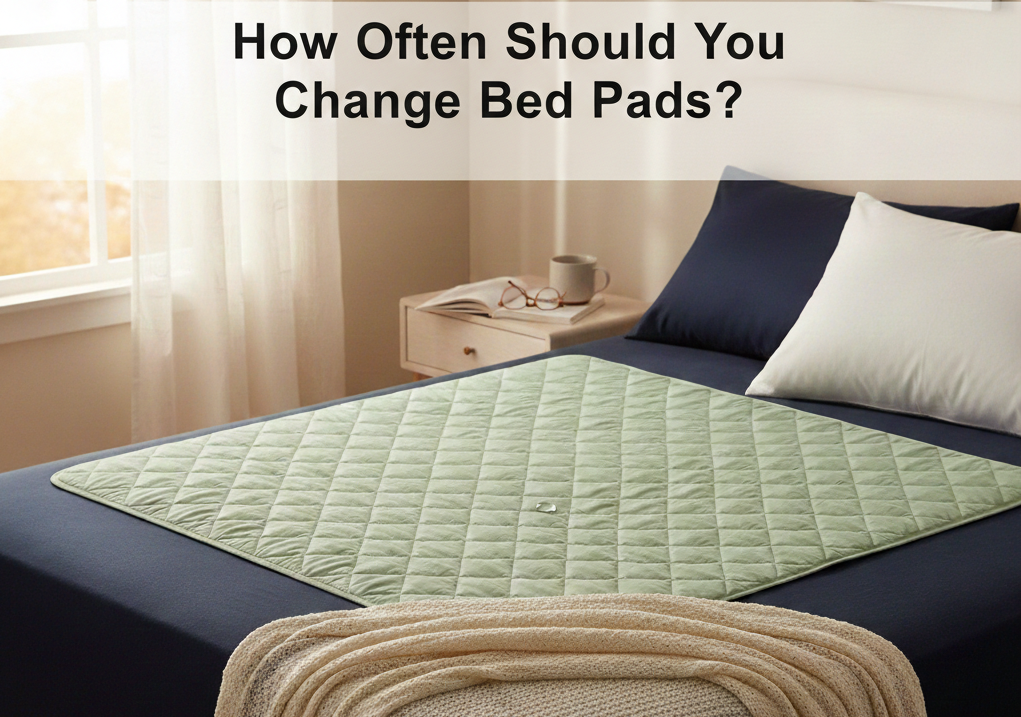
Bed pads play a crucial role in protecting mattresses, maintaining hygiene, and ensuring comfort for individuals dealing with incontinence, recovery, or nighttime accidents. One of the most common questions caregivers and users ask is:
How often should you change bed pads?
The answer depends on several factors, including the type of bed pad, frequency of use, and the level of moisture involved. Let’s break it down clearly.
Why Changing Bed Pads Regularly Is Important
Changing bed pads on time is essential for:
- Maintaining good hygiene
- Preventing skin irritation and rashes
- Reducing odours and bacteria buildup
- Keeping mattresses and bedding protected
Leaving a wet or soiled bed pad in place for too long can lead to discomfort and skin irritation, especially for the elderly or individuals with sensitive skin.
How Often Should Disposable Bed Pads Be Changed?
Disposable bed pads should be changed after every use or immediately once they become wet or soiled.
These pads are designed for single use and are not meant to be reused once moisture has been absorbed.
Best Practices for Disposable Bed Pads:
- Change immediately after any leakage
- Do not attempt to dry or reuse them
- Dispose of them hygienically
- Keep spare pads nearby for quick replacement
Disposable bed pads are ideal for short-term care, travel, and situations where hygiene and convenience are priorities.
How Often Should Reusable Bed Pads Be Changed?
Reusable bed pads should be changed as soon as they become wet and washed before reuse.
For overnight use:
- Change daily if the pad is used every night
- Change immediately if heavily soiled
Even if the pad feels only slightly damp, it’s best to replace it to keep the skin dry and comfortable.
Factors That Affect How Often Bed Pads Need Changing
Several factors influence replacement frequency:
Level of Incontinence
Heavier incontinence requires more frequent pad changes, sometimes multiple times during the night.
Duration of Use
Pads used overnight or for extended periods need closer monitoring than those used for short intervals.
User’s Skin Sensitivity
People with sensitive skin may require more frequent changes to prevent irritation.
Pad Absorbency
Higher-absorbency bed pads can hold more liquid but should still be changed once wet.
Conclusion
So, how often should you change bed pads?
Disposable bed pads should be changed after every use, while reusable bed pads should be changed and washed as soon as they become wet.
Regular replacement is key to maintaining hygiene, comfort, and skin health. Choosing the right bed pad and changing it at the right time ensures peace of mind for both users and caregivers.